Science
What is the Maine Healthy Beaches (MHB) Program?
How is the program being implemented in Maine?
What criteria are used to determine the health of a beach?
What kind of illnesses can someone get from contaminated beach water?
What are the symptoms of a water-related illness?
How are water-related illnesses spread?
If you have a water-related illness
- What is the Maine Healthy Beaches (MHB) Program?
- It is a statewide effort to monitor water quality and protect public health at Maine's participating coastal beaches.
The U.S. Environmental Protection Agency (EPA) initiated the Beaches Environmental Assessment, Closure and Health (BEACH) Act of 2000 in response to the growing concern about public health risks posed by polluted coastal bathing beaches. The Maine Healthy Beaches Program is taking a leading role in this initiative. Efforts include a public education program and systematic measurement of critical factors affecting the health of our beaches and the people who visit them
- How is the program being implemented in Maine?
- The MHB Program is a unique partnership among municipalities, state parks, the University of Maine Cooperative Extension/Sea Grant, Maine Department of Environmental Protection, non-profit organizations, and state and federal agencies.
Program Elements Include:
- EPA-approved quality assured field, laboratory and notification protocols.
- Prompt public notification of beach water quality conditions.
- Risk assessment and classification of beaches.
- Public education and outreach.
- Special studies and sanitary survey work to pinpoint pollution sources.
- Building local capacity to find, fix, and prevent pollution sources.
The MHB Program is committed to improving beach water quality by bringing together local/state officials, partnering with state agencies, non profits and citizens with a focus on sharing resources and solving problems.
- What criteria are used to determine the health of a beach?
- Several relevant factors are considered, including water quality history, potential or actual sources of pollution, current conditions and water test results. Tools used for assessing conditions at a beach include routine monitoring and data analysis, a Risk Assessment Matrix, special studies and sanitary survey work. Environmental impacts considered include nearby waste disposal, storm water runoff, public restroom facilities, the presence of dogs or wildlife on the beach, beach usage, boating activity, etc. Download a copy of the Risk Assessment Matrix.
- How is the water tested?
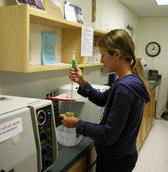
- Routine monitoring of coastal beaches is conducted weekly from Memorial Day to Labor Day using EPA-approved quality assured protocols. Field monitoring methods include: collecting a water sample using a sterile container, measuring air and water temperatures, salinity, recording present weather conditions and any other observations that might impact water quality (e.g. heavy rainfall, crowded beach, birds, etc.). Samples are protected against contamination at all times and stored in a cooler a 4-10° C. Samples must be processed by the laboratory within 6 hours of collection.
The MHB Program uses the Enterolert© method, Most Probable Number (MPN) technology, for analyzing samples. Results are usually available 26-34 hours after sample collection and are posted to the MHB website under Today's Beach Status
- What kind of illnesses can someone get from contaminated beach water?
- The most commonly reported symptom of water-related illnesses is diarrhea. Diarrheal illnesses can be caused by bacteria, parasites and viruses such as Cryptosporidium, Giardia, Shigella, and E. coli. For more information about these bacteria and parasites, see the CDC Healthy Swimming Web site.
- What are the symptoms of a water-related illness?
- Vomiting, sinus infections, stomachache and other flu-like symptoms can be caused by contact with contaminated water. Other illnesses can include skin, ear, respiratory, eye and wound infections.
- How are water-related illnesses spread?
- They may be spread by swallowing or having contact with contaminated water at lakes, rivers or the ocean. The water can become contaminated by fecal matter which carries harmful bacteria, parasites and viruses. This unsanitary condition can be due to several possible causes:
- Improperly disposed of diapers
- Children not properly cleaned after using the bathroom
- Swimmers with diarrhea
- A vomiting or fecal accident in the water
- Wild and Domestic Animal feces
- Pet waste
- Malfunctioning subsurface wastewater disposal or sanitary collection systems in the vicinity
- Nearby boats discharging sewage into the water
- Contaminated stormwater runoff
- If you have a water-related illness
-
- Seek treatment from your medical provider.
- Report illness to lifeguard, Beach Manager or staff on duty.
- To report the illness to the Maine CDC:
207.287.8016/800.821.5821
or 207.287.4479 TTY
disease.reporting@maine.gov